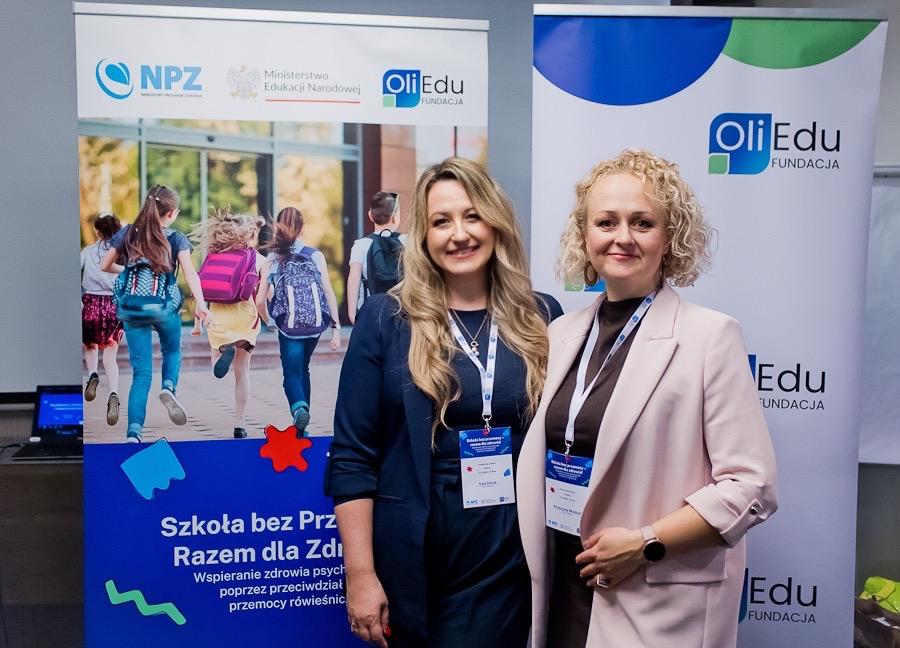
Through our public health project for the Ministry of National Education, we have developed 20 Best Practices for Preventing Peer Violence!
The OliEdu Foundation for Civic Education, through its project titled “School Without Violence—Together for Health! Supporting Mental Health by Preventing Peer Violence,” has compiled Best Practices for Preventing Peer Violence from elementary and secondary schools across Poland.
The main goal of these efforts is:
- to prevent peer violence by promoting best practices, as well as through various educational activities and the shared exchange of experiences.
Based on the descriptions of best practices received from educational institutions, a team of experts in the fields of pedagogy, psychology, sociology, law, and health began to document them and identify the best practices in the context of preventing peer violence as measures that are effective, sustainable, and innovative, promoting safe relationships and reducing aggression among students.
The descriptions of Good Practices for Preventing Peer Violence that were collected made it possible to identify the following 20 examples.
The following classification:
- organizes the various measures into a coherent system,
- shows that preventing violence is a multi-level process,
- facilitates the assignment of practices to educational and preventive programs,
- and is consistent with the whole-school approach.
I. Building a Positive School Climate and Peer Relationships
Activities that strengthen empathy, kindness, a sense of belonging, and safety:
- Tree of Happiness
- Kindness Day
- Peer Violence Prevention Week
- Active and on the Move Against Peer Violence
- Creatively Against Violence
Goal: To strengthen prosocial attitudes and prevent violence through positive community experiences.
II. Prevention and Social-Emotional Learning for Students
Systematic educational activities that develop emotional and social competencies:
- Peer violence prevention programs
- Nationwide campaigns against peer violence
- Psychoeducational activities and workshops
- Cross-curricular activities
- Prevention-focused performances
Goal: to raise students’ awareness, teach them to recognize violence, and model constructive responses.
III. Psychological Support and Safe Spaces at School
Solutions that enable students to seek help and regulate their emotions:
- Confidential Box
- “Quiet Zone”
- Meetings with representatives from psychological and pedagogical counseling centers
Goal: early intervention, reducing emotional tension, and ensuring access to support.
IV. Peer Support and Remedial Methods
Activities based on dialogue and students’ social responsibility:
- Peer support and mediation
Goal: resolving conflicts without escalation, strengthening responsibility and empathy.
V. Collaboration with external institutions and specialists
Activities that increase the effectiveness of prevention through expert support:
- Preventive meetings with the police
- School collaboration with a lawyer
- Collaboration with foundations and associations
Goal: broadening students’ perspectives, strengthening legal and social responsibility.
VI. Involvement of parents and the local community
Activities supporting the coherence of educational efforts:
- Training sessions and workshops for parents
Goal: developing a shared strategy for responding to violence.
VII. Social Engagement, Participation, and Dialogue
Forms of engagement that involve students and the school community in reflection and action:
- Conferences and debates
- Organizing contests
Goal: Strengthening students’ voices and a culture of dialogue.
Check out 20 good practices for preventing peer violence.
This project was co-financed from the state budget with funds from the Ministry of National Education as part of the National Health Program 2021–2025.